Why Most Diets Fail
The weight loss industry is worth over $70 billion annually, yet most people struggle to keep weight off long term. A meta-analysis found that while diets often work in the short term, over 80% of dieters regain lost weight within five years (Anderson et al., 2001).
Why? Because diets typically rely on restriction, not behavior change. When you cut out entire food groups or drastically reduce calories, your body fights back: metabolism slows, hunger hormones rise, and cravings intensify.
The truth: lasting weight loss is not about crash diets but about sustainable, science-backed habits that reshape lifestyle.
The Science of Weight Loss
Energy Balance (Calories In vs. Out)
Weight loss fundamentally depends on creating an energy deficit: consuming fewer calories than you expend. But this is overly simplistic.
Adaptive Thermogenesis
The body defends its weight. When you lose weight, metabolism slows down — a process called adaptive thermogenesis. Your body burns fewer calories at rest, making further weight loss harder (Rosenbaum & Leibel, 2010).
Hormonal Adaptations
After dieting, hormones shift:
- Ghrelin (hunger hormone) increases.
- Leptin (satiety hormone) decreases.
This combination makes you hungrier and less satisfied (Sumithran et al., 2011).
The Role of Environment
Modern life promotes overeating: large portions, processed snacks, constant food cues. A sustainable approach must address not just the body, but also the environment.
5 Science-Backed Habits for Sustainable Weight Loss
1. Prioritize Protein Early in the Day
Protein is the most satiating macronutrient. Eating enough protein helps preserve lean muscle mass while burning fat. Studies show that a high-protein breakfast (30g+) reduces hunger and prevents overeating later in the day (Leidy et al., 2015).
Practical tips:
- Breakfast options: Greek yogurt with chia seeds, scrambled eggs with vegetables, or a smoothie with whey protein.
- Why it works: Protein stimulates the release of satiety hormones (GLP-1, PYY) and reduces ghrelin.
- Bonus: Muscle requires more energy to maintain, so eating protein supports a higher metabolism.
2. Fill Half Your Plate with High-Fiber Foods
Fiber adds bulk without calories, slows digestion, and stabilizes blood sugar. A meta-analysis shows that diets higher in fiber lead to significant reductions in body weight, BMI, and waist circumference (Slavin, 2013).
Practical tips:
- At each meal: Fill half your plate with vegetables, fruits, or legumes.
- Snack ideas: Apple slices with almond butter, roasted chickpeas, or carrots with hummus.
- Pro trick: Start meals with a fiber-rich salad or soup — research shows this reduces total calorie intake by up to 20% (Rolls et al., 2004).
3. Sleep 7–9 Hours Nightly
Sleep is one of the most overlooked factors in weight management. Poor sleep disrupts leptin and ghrelin, leading to increased appetite and cravings for high-calorie foods (Taheri et al., 2004).
Practical tips:
- Set a consistent bedtime and wake-up time.
- Limit caffeine after 2 p.m.
- Avoid screens for an hour before bed — blue light suppresses melatonin.
- Create a “wind-down routine” with reading, prayer, or light stretching.
Evidence: Sleep-deprived individuals eat an average of 300 more calories per day than those who sleep well (Nedeltcheva et al., 2009).
4. Move More Throughout the Day
Exercise is vital, but daily movement beyond the gym — called non-exercise activity thermogenesis (NEAT) — may matter even more. NEAT includes walking, fidgeting, standing, cleaning, and other small activities. It can account for up to 2,000 calories burned per day (Levine, 2002).
Practical tips:
- Take walking meetings.
- Use stairs instead of elevators.
- Park farther from entrances.
- Stand while making phone calls.
Structured workouts (strength training, cardio) still matter for muscle and cardiovascular health, but NEAT ensures you burn energy consistently throughout the day.
5. Build Habits, Not Willpower
Most diets fail because they rely on willpower, which is limited. Instead, sustainable weight loss depends on habits.
Habit stacking — attaching a new behavior to an existing one — increases adherence (Gollwitzer, 1999).
- Example: After brushing your teeth at night → prep tomorrow’s lunch.
- Example: While making morning coffee → drink one glass of water.
Environment design: Make healthy behaviors the default. Keep fruit on the counter, store treats out of sight, pre-cut vegetables for quick snacks.
Over time, small actions accumulate into automatic behaviors, removing the need for constant discipline.
Common Myths to Avoid
- “Carbs make you fat”: Quality matters more than quantity. Whole grains, fruits, and vegetables support weight loss, while refined carbs drive overeating.
- “Skipping meals speeds fat loss”: Skipping often backfires, leading to overeating later. Instead, focus on balanced meals.
- “Supplements replace lifestyle”: No pill can substitute for consistent habits in diet, sleep, and exercise.
The Role of Mindset and Emotional Health
Weight loss isn’t just physical. Emotional and mental health are crucial:
- Stress eating: Cortisol increases appetite for calorie-dense foods (Epel et al., 2001).
- All-or-nothing thinking: Restrictive mindsets cause cycles of guilt and bingeing.
- Self-compassion: Studies show being kind to yourself improves long-term success in weight management (Sirois et al., 2015).
Building resilience and balance around food is just as important as calorie math.
The Bottom Line
Weight loss that lasts isn’t about suffering or short-term restrictions. It’s about small, science-backed habits you can keep for life: eating protein-rich meals, filling your plate with fiber, sleeping well, moving daily, and building automatic routines.
Start with one habit. Master it. Then add another. Over time, these changes compound into a healthier weight and a more energized life.
The secret is not speed — it’s sustainability.
References
- Anderson, J. W., Konz, E. C., Frederich, R. C., & Wood, C. L. (2001). Long-term weight-loss maintenance: A meta-analysis of US studies. American Journal of Clinical Nutrition, 74(5), 579–584. https://doi.org/10.1093/ajcn/74.5.579
- Epel, E., Lapidus, R., McEwen, B., & Brownell, K. (2001). Stress may add bite to appetite in women: A laboratory study of stress-induced cortisol and eating behavior. Psychoneuroendocrinology, 26(1), 37–49. https://doi.org/10.1016/S0306-4530(00)00035-4
- Gollwitzer, P. M. (1999). Implementation intentions: Strong effects of simple plans. American Psychologist, 54(7), 493–503. https://doi.org/10.1037/0003-066X.54.7.493
- Leidy, H. J., Hoertel, H. A., Douglas, S. M., Higgins, K. A., & Shafer, R. S. (2015). A high-protein breakfast prevents body fat gain, reduces daily food intake, and reduces evening snacking in adolescents. Obesity, 23(9), 1761–1768. https://doi.org/10.1002/oby.21185
- Levine, J. A. (2002). Non-exercise activity thermogenesis (NEAT). Best Practice & Research Clinical Endocrinology & Metabolism, 16(4), 679–702. https://doi.org/10.1053/beem.2002.0227
- Nedeltcheva, A. V., Kilkus, J. M., Imperial, J., Kasza, K., Schoeller, D. A., & Penev, P. D. (2009). Sleep curtailment is accompanied by increased intake of calories from snacks. American Journal of Clinical Nutrition, 89(1), 126–133. https://doi.org/10.3945/ajcn.2008.26574
- Rosenbaum, M., & Leibel, R. L. (2010). Adaptive thermogenesis in humans. International Journal of Obesity, 34(S1), S47–S55. https://doi.org/10.1038/ijo.2010.184
- Rolls, B. J., Roe, L. S., & Meengs, J. S. (2004). Salad and satiety: Energy density and portion size of a first-course salad affect energy intake. Journal of the American Dietetic Association, 104(10), 1570–1576. https://doi.org/10.1016/j.jada.2004.07.001
- Sirois, F. M., Yang, S., & van Eerde, W. (2015). Procrastination, stress, and chronic health conditions: A temporal perspective. Journal of Behavioral Medicine, 38(6), 682–692. https://doi.org/10.1007/s10865-015-9721-2
- Slavin, J. L. (2013). Fiber and prebiotics: Mechanisms and health benefits. Nutrients, 5(4), 1417–1435. https://doi.org/10.3390/nu5041417
- Sumithran, P., Prendergast, L. A., Delbridge, E., Purcell, K., Shulkes, A., Kriketos, A., & Proietto, J. (2011). Long-term persistence of hormonal adaptations to weight loss. New England Journal of Medicine, 365(17), 1597–1604. https://doi.org/10.1056/NEJMoa1105816
- Taheri, S., Lin, L., Austin, D., Young, T., & Mignot, E. (2004). Short sleep duration is associated with reduced leptin, elevated ghrelin, and increased body mass index. PLoS Medicine, 1(3), e62. https://doi.org/10.1371/journal.pmed.0010062
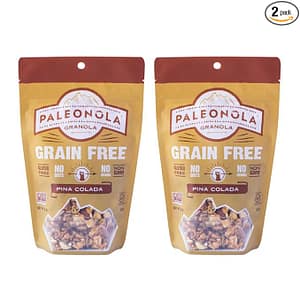
Related products



Related posts:
 7 Superfoods That Naturally Boost Your Energy (No Caffeine Needed)
 Chia Seeds: The Tiny Superfood with Big Benefits for Your Body and Brain
 Blueberries: The Antioxidant Superfruit That Protects Your Brain, Heart, and Immune System
 Blue Matcha: The Science and Tradition Behind the Brilliant Blue Drink