The Modern Problem: Too Much Sitting, Too Little Movement
Most adults spend the majority of their day sitting — at desks, in cars, and on couches. The World Health Organization warns that sedentary behavior is among the top risk factors for chronic disease and premature death (WHO, 2023). Even for people who exercise, long periods of inactivity can counteract many of those benefits.
In 2019, a landmark BMJ meta-analysis found that sitting more than 8 hours a day was linked to a 27% higher risk of early mortality, even after adjusting for traditional exercise levels (Ekelund et al., 2019). The problem isn’t just how little we move — it’s how continuously we stay still.
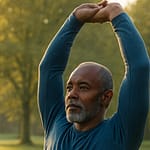
That’s where functional micro-workouts come in: short, full-body bursts of movement lasting just 1–3 minutes. They’re designed to “wake up” your muscles, stimulate blood flow, and reset your posture — all without requiring equipment, time blocks, or gym access.
Why Functional Micro-Workouts Work
The body responds positively to frequency and consistency, not just duration. Even brief activity spikes cause measurable benefits in metabolism, circulation, and energy regulation.
Researchers at the University of Sydney introduced the concept of “vigorous intermittent lifestyle physical activity” (VILPA) — natural, spontaneous bursts of effort, such as climbing stairs quickly or lifting groceries. Their 2022 study found that just 3 to 4 short bouts of VILPA per day reduced the risk of cardiovascular death by nearly 50% (Stamatakis et al., 2022).
Physiologically, here’s what happens:
- Heart rate and blood flow increase, improving oxygen delivery to tissues.
- Glucose uptake rises, lowering blood sugar spikes after meals (Wheeler et al., 2022).
- Postural muscles reactivate, reducing stiffness and lower back pain.
- Neurotransmitters like dopamine and serotonin increase, enhancing focus and mood (Erickson et al., 2019).
In other words, micro-workouts “reset” the system — reversing hours of sitting in just minutes.
How They Differ from Traditional Exercise
Traditional workouts often focus on intensity or endurance — like running, cycling, or strength training sessions. Functional micro-workouts, in contrast, focus on movement frequency and natural functionality (read also: Strength Training for Longevity: Building Muscle to Support Healthy Aging).
They mimic everyday actions: squatting, pushing, twisting, or balancing. Each move trains multiple muscle groups at once while promoting stability and mobility. Over time, this pattern of movement creates what physiologists call “movement snacking” — small but powerful doses of exercise that compound throughout the day (Dempsey et al., 2020).
The beauty of this method is accessibility. You don’t need a gym membership or special gear — just your own body and a few spare minutes.
7 Functional Micro-Workouts to Try Anywhere
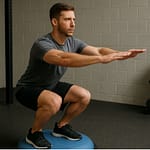
1. Chair Squats – Strengthen the Foundation
Sit down and stand up slowly for one minute, keeping your feet hip-width apart. This move strengthens your glutes, thighs, and core, and reinforces functional strength for daily movements like standing or lifting.
(Science note: Functional squats mimic everyday biomechanics and improve lower-body endurance while maintaining joint flexibility.)
2. Wall Push-Ups – Build Upper-Body Mobility
Place your palms on a wall at shoulder height, step back slightly, and push through your palms for 60 seconds. Great for chest, shoulders, and triceps, while improving circulation after long sitting periods.
(Research shows that bodyweight upper-body movements stimulate blood flow and prevent shoulder stiffness common in office workers.)
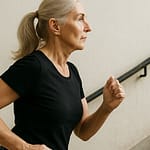
3. Stair Climbs – Boost Cardio in Minutes
Walk or jog up a staircase for 2–3 minutes, maintaining a steady rhythm. If you don’t have stairs, perform high-knee marches in place. This enhances cardiovascular endurance and improves balance coordination.
(In a 2020 study, intermittent stair climbing improved aerobic capacity comparably to longer workouts performed at moderate intensity [Allison et al., 2020].)
4. Calf Raises – Activate Circulation
Stand tall and lift your heels slowly, holding the top position for 3 seconds before lowering. Repeat for 1–2 minutes. This strengthens ankle stability and enhances venous return — key for people who stand or sit all day.
5. Standing Plank Hold – Core and Posture Reset
Place your forearms on a counter or desk edge, step your feet back, and hold a plank for 30–45 seconds. Engages deep core muscles and stabilizes your spine.
(Strong postural muscles reduce the risk of lower back pain and improve sitting tolerance.)
6. Shoulder Rolls & Arm Circles – Unwind Upper Tension
Roll your shoulders backward 10 times, then extend your arms and draw small circles. Continue for 60 seconds. This relieves neck and shoulder tightness from screen use and supports healthy mobility.
7. Walking Lunges – Strength, Balance, and Flow
Step forward with one leg, bend both knees to 90°, and push back up. Switch legs and repeat for 2 minutes. This move strengthens legs, glutes, and balance, improving coordination and functional mobility.
How to Integrate Micro-Workouts into Daily Life
- Every 60–90 minutes: Take a 2–3 minute movement break.
- Pair it with triggers: Do squats after coffee, lunges after calls, or push-ups before meals.
- Combine with outdoor movement: A 5-minute sunlight break boosts Vitamin D and mood (Holick, 2020).
- End with recovery: Gentle stretching helps maintain flexibility and lower tension.
Over time, these small actions build into measurable physical gains — improved endurance, better posture, and sharper focus.
Beyond Fitness: The Cognitive and Emotional Benefits
Physical activity triggers the release of brain-derived neurotrophic factor (BDNF), a protein that supports neuroplasticity — the brain’s ability to adapt and grow (Erickson et al., 2019). That’s why even brief workouts can increase focus, memory, and creativity.
Furthermore, these micro-breaks reduce fatigue and emotional overload. Movement resets the nervous system, shifting you from sympathetic activation (stress mode) to parasympathetic calm (recovery mode).
A 2023 review in Frontiers in Psychology found that micro-bouts of physical activity during work hours significantly improved mood and perceived productivity without interrupting cognitive performance (Marques et al., 2023).
In essence, functional micro-workouts are not just fitness tools — they’re stress-management strategies rooted in neuroscience.
The Takeaway: Movement Is Medicine
Functional micro-workouts redefine what it means to stay active in modern life. They prove that fitness isn’t about time spent exercising — it’s about consistency in movement.
By sprinkling small, functional bursts of effort throughout your day, you can:
- Counteract the effects of prolonged sitting.
- Improve energy, focus, and longevity.
- Build real-world strength that enhances everyday life.
Three minutes of movement, repeated often, can truly reshape your health. The science is clear — you don’t need more hours. You just need more movement.
References
Allison, M. K., Bagley, J. R., & D’Acquisto, L. J. (2020). Short bouts of stair climbing exercise improve cardiorespiratory fitness in sedentary women. Applied Physiology, Nutrition, and Metabolism, 45(5), 521–527. https://doi.org/10.1139/apnm-2019-0604
Dempsey, P. C., Larsen, R. N., Dunstan, D. W., Owen, N., & Kingwell, B. A. (2020). Sitting less and moving more: Implications for hypertension. Hypertension, 75(4), 918–926. https://doi.org/10.1161/HYPERTENSIONAHA.119.14020
Ekelund, U., Tarp, J., Steene-Johannessen, J., et al. (2019). Dose-response associations between accelerometry measured physical activity and sedentary time and all cause mortality: Systematic review and harmonised meta-analysis. BMJ, 366, l4570. https://doi.org/10.1136/bmj.l4570
Erickson, K. I., Hillman, C. H., & Kramer, A. F. (2019). Physical activity, brain, and cognition. Current Opinion in Behavioral Sciences, 32, 33–38. https://doi.org/10.1016/j.cobeha.2019.02.001
Holick, M. F. (2020). The vitamin D deficiency pandemic: Approaches for diagnosis, treatment and prevention. Reviews in Endocrine and Metabolic Disorders, 21(3), 273–289. https://doi.org/10.1007/s11154-020-09532-0
Marques, A., Henriques-Neto, D., & Demetriou, Y. (2023). Micro-physical activity breaks at work: A systematic review of cognitive and affective outcomes. Frontiers in Psychology, 14, 1192457. https://doi.org/10.3389/fpsyg.2023.1192457
Stamatakis, E., Ding, D., Britton, A., et al. (2022). Vigorous intermittent lifestyle physical activity and all-cause mortality: A prospective cohort study. Nature Medicine, 28(11), 2303–2310. https://doi.org/10.1038/s41591-022-02054-6
Wheeler, M. J., Green, D. J., Ellis, K. A., & Larsen, R. N. (2022). Breaking up prolonged sitting with resistance exercise improves metabolic and vascular function. European Journal of Applied Physiology, 122(1), 213–223. https://doi.org/10.1007/s00421-021-04845-5
World Health Organization (WHO). (2023). Physical activity fact sheet. https://www.who.int/news-room/fact-sheets/detail/physical-activity