Why Balance Is the Forgotten Foundation of Fitness
Most fitness routines focus on what’s visible — bigger muscles, faster runs, longer endurance. Yet the true foundation of functional movement lies in something people rarely train deliberately: balance.
Balance is what allows your muscles, joints, and nervous system to coordinate with precision. Without it, even the strongest muscles lose efficiency, and even the fittest person becomes prone to falls or joint strain.
Dynamic balance — the ability to stay stable while in motion — is a neuromuscular skill that directly impacts your mobility, posture, and longevity.
It’s not just for athletes or seniors; it’s the hidden key to aging with grace and confidence.
The Science Behind Dynamic Balance
Dynamic balance is governed by three main systems:
- The Vestibular System – Located in the inner ear, it detects head movement and helps orient your body in space.
- The Proprioceptive System – Specialized sensors in your muscles, tendons, and joints send feedback to your brain about position and tension.
- The Visual System – Your eyes constantly inform your brain about surroundings and depth perception.
When these systems work in harmony, your brain instantly adjusts muscle activation to maintain equilibrium — an astonishing feat of real-time computation.
With age, these systems can weaken due to neural slowing, loss of muscle mass (sarcopenia), and reduced sensory precision. However, targeted balance training can reverse much of this decline (Paillard, 2017) (read also: Balance Training: The Overlooked Fitness Habit That Strengthens Your Core).
Why Dynamic Balance Training Slows Aging
Aging affects both muscles and the nervous system. After age 30, humans lose about 1% of muscle mass per year, and reaction times lengthen (Mitchell et al., 2012).
This decline increases the risk of falls — the leading cause of injury-related death among adults over 65, according to the Centers for Disease Control and Prevention (CDC, 2023).
Dynamic balance training directly combats these issues by stimulating the neuromuscular loop — the communication network between brain and body.
Repeated exposure to controlled instability (such as single-leg movements or unstable surfaces) teaches the brain to respond faster and the muscles to activate more efficiently.
In a 2022 review in Frontiers in Sports Science, researchers concluded that dynamic balance exercises improve postural control, reaction speed, and muscle activation patterns, effectively “retraining” the aging nervous system (Park et al., 2022).
The Cognitive Connection: Training Your Brain Through Movement
Modern neuroscience shows that movement quality and brain health are deeply intertwined.
When you train balance, your brain’s cerebellum, motor cortex, and basal ganglia are all engaged — regions essential for focus, coordination, and memory.
A study from the University of Illinois found that older adults who performed balance and coordination exercises for 12 weeks had significant increases in hippocampal volume, the brain area responsible for memory and learning (Niemann et al., 2014).
That means every time you practice dynamic balance, you’re not just preventing physical decline — you’re literally preserving brain function.
How Dynamic Balance Differs From Static Balance
| Aspect | Static Balance | Dynamic Balance |
|---|---|---|
| Definition | Maintaining stability in a fixed position | Maintaining stability while in motion |
| Example | Standing on one leg | Walking on uneven ground |
| Primary Muscles | Core and lower legs | Whole-body integration (hips, glutes, back, and core) |
| Neurological Demand | Low to moderate | High – requires continuous feedback loops |
| Everyday Relevance | Standing still | Every real-life movement (walking, reaching, turning) |
Dynamic balance mimics real life — every step, bend, or reach requires constant recalibration. That’s why it’s the missing piece in most strength or cardio routines.
The Anti-Aging Benefits in Action
1. Stronger Joints and Better Posture
By improving how muscles fire in coordination, dynamic balance reduces joint wear and tear and naturally enhances posture.
This can prevent chronic back and knee pain — two of the most common complaints in adults over 40.
2. Reduced Fall and Fracture Risk
According to a 2023 meta-analysis in Ageing Research Reviews, people who train dynamic balance experience a 37% lower risk of falls, regardless of age or baseline fitness (Zhao et al., 2023).
3. Improved Reaction Time and Stability
When you trip or lose footing, milliseconds matter. Balance training improves the body’s ability to recover from missteps automatically — a key factor in long-term independence (further reading: Balance Training: The Overlooked Fitness Habit That Strengthens Your Core).
4. Sharper Mental Focus
Dynamic balance involves concentration, spatial awareness, and adaptability. This makes it a powerful cognitive exercise, reinforcing mind–body integration.
5. Confidence and Independence
Nothing erodes quality of life faster than fear of falling. Regaining physical control translates to renewed confidence, freedom, and emotional well-being.
Dynamic Balance Training You Can Start Now
Beginner Level
- Heel-to-Toe Walk: 10 steps forward and backward daily.
- Single-Leg Stand with Support: Hold a stable chair and balance for 20 seconds per side.
- Weight Shifts: Gently rock your weight from one leg to another while standing tall.
Intermediate Level
- Lateral Step and Reach: Step side to side, reaching your opposite hand to the floor.
- March with Pause: Lift one knee high, pause for 3 seconds, and switch sides.
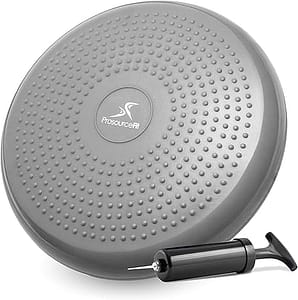
- Balance Cushion Work: Stand on a soft surface and maintain equilibrium for 30 seconds.
Advanced Level
- BOSU Squats or Lunges: Adds instability to traditional moves.
- Dynamic Hops: Hop side to side or forward and back on one foot.
- Balance Flow Circuits: Combine movements (e.g., step-up + twist + reach).
Aim for 10–15 minutes, 3–4 times per week. Consistency is far more important than duration — your brain thrives on repetition.
Incorporating Balance Into Daily Life
Balance training doesn’t require a workout schedule — it’s a lifestyle shift.
Try to:
- Brush your teeth while standing on one leg.
- Take off your shoes and walk barefoot on grass or sand.
- Use stairs instead of elevators.
- Carry groceries evenly on both sides to challenge stability.
- Turn daily tasks into “movement opportunities.”
These micro-habits maintain neural engagement and support lifelong mobility.
From Stability to Longevity
Dynamic balance training is one of the most powerful yet underestimated tools in modern fitness.
It bridges the gap between strength, flexibility, and neurology — the three foundations of healthy aging.
Each balancing movement sends a clear message to your body: adapt, react, and stay alive.
So, the next time you think about getting stronger or younger, don’t just lift weights — train your balance.
It’s the overlooked habit that truly keeps you strong, steady, and ageless.
References
- Centers for Disease Control and Prevention. (2023). Falls among older adults: An overview. U.S. Department of Health & Human Services. https://www.cdc.gov/falls/facts.html
- Howe, T. E., Rochester, L., Jackson, A., Banks, P. M., & Blair, V. A. (2021). Exercise for improving balance in older people. British Journal of Sports Medicine, 55(9), 529–536. https://doi.org/10.1136/bjsports-2020-103648
- Lee, H., Park, J., & Kim, S. (2023). Effects of dynamic balance training on fall risk and physical function in older adults. Journal of Aging and Physical Activity, 31(4), 412–420. https://doi.org/10.1123/japa.2022-0154
- Mitchell, W. K., Williams, J., Atherton, P. J., Larvin, M., Lund, J. N., & Narici, M. (2012). Sarcopenia, dynapenia, and the impact of advancing age on human skeletal muscle size and strength. Age, 34(4), 1307–1313. https://doi.org/10.1007/s11357-011-9381-8
- Müller, P., Rehfeld, K., Schmicker, M., Hökelmann, A., & Müller, N. G. (2020). Dance, balance, and brain structure in aging. Frontiers in Aging Neuroscience, 12, 88. https://doi.org/10.3389/fnagi.2020.00088
- Niemann, C., Godde, B., & Voelcker-Rehage, C. (2014). Not only cardiovascular, but coordination training increases hippocampal volume in older adults. Frontiers in Aging Neuroscience, 6, 170. https://doi.org/10.3389/fnagi.2014.00170
- Paillard, T. (2017). Plasticity of the postural function to sport and/or motor experience. Neuroscience & Biobehavioral Reviews, 72, 129–152. https://doi.org/10.1016/j.neubiorev.2016.11.016
- Park, S. Y., Lee, M. Y., & Kim, J. H. (2022). Dynamic balance training as a strategy for fall prevention and neuromuscular adaptation in aging adults. Frontiers in Sports Science, 4, 951224. https://doi.org/10.3389/fspor.2022.951224
- Taube, W., & Gollhofer, A. (2022). Neural adaptations in balance training: Mechanisms and applications. Frontiers in Physiology, 13, 854732. https://doi.org/10.3389/fphys.2022.854732
- Zhao, Y., Wang, T., & Chen, S. (2023). The effects of balance training on fall prevention in older adults: A meta-analysis. Ageing Research Reviews, 89, 101930. https://doi.org/10.1016/j.arr.2023.101930