When cold and flu season arrives, many people instinctively reach for natural remedies to relieve symptoms like sore throat, congestion, and fatigue. Among the most trusted are chamomile tea and ginger tea. Both herbs have deep roots in traditional medicine — spanning from Ancient Egypt and Greece to Traditional Chinese Medicine (TCM) and Ayurveda.
But what does modern science say? And which one is truly better when you’re fighting a seasonal infection? This article dives into the history, bioactive compounds, clinical research, and practical applications of chamomile and ginger tea — ending with a side-by-side comparison and guidance on how to use them together.
Chamomile Tea: The Ancient Herb of Calm and Comfort
Historical Roots
Chamomile (Matricaria chamomilla or Chamaemelum nobile) has been used for over 2,000 years. The Egyptians dedicated chamomile to the sun god Ra and used it as a fever remedy. The Greeks prescribed it for digestive issues and inflammation, while in European folk medicine it became a staple for colds, insomnia, and wound healing.
Bioactive Compounds
Chamomile’s therapeutic potential comes mainly from:
- Apigenin – a flavonoid with anti-inflammatory and mild sedative effects.
- Bisabolol – with antimicrobial and soothing properties.
- Chamazulene – known for anti-inflammatory action when released in hot water or steam.
Scientific Evidence for Colds and Flu
- Sleep & Recovery: Sleep is critical for immune response. Chamomile tea has been linked to better sleep quality in adults with insomnia (Zick et al., 2011).
- Respiratory Relief: Chamomile steam inhalation reduced symptoms in cold patients in controlled studies (Srivastava et al., 2010).
- Immune Modulation: Its flavonoids may reduce oxidative stress and inflammation, supporting immune defenses (McKay & Blumberg, 2006).
Best Use Case: Evening tea for sore throat relief, anxiety reduction, and sleep support.
Ginger Tea: The Fiery Root of Healing
Historical Roots
Ginger (Zingiber officinale) is one of the most widely used medicinal plants in the world. In Ayurveda, it is called “the universal medicine” for its warming and digestive properties. Traditional Chinese Medicine has prescribed ginger tea for thousands of years to relieve cold-induced illnesses, nausea, and respiratory issues (read also: Garlic: The Powerful Home Remedy Backed by Centuries of Tradition and Modern Science).
Bioactive Compounds
Ginger’s power lies in:
- Gingerols and Shogaols – anti-inflammatory, antiviral, and circulation-boosting compounds.
- Zingerone – contributes to antioxidant effects and helps fight nausea.
Scientific Evidence for Colds and Flu
- Antiviral Activity: Fresh ginger inhibited human respiratory syncytial virus in vitro (Chang et al., 2013).
- Anti-Nausea: Clinical studies confirm ginger’s effectiveness against nausea and vomiting (Ernst & Pittler, 2000).
- Respiratory Benefits: Its warming effect may dilate blood vessels, improve circulation, and promote sweating, helping reduce fever and congestion.
Best Use Case: Daytime tea to reduce nausea, ease congestion, and warm the body.
Chamomile Tea vs. Ginger Tea: Deep Comparison
| Aspect | Chamomile Tea 🌼 | Ginger Tea 🌱 |
|---|---|---|
| Primary Action | Calming, soothing, sleep aid | Stimulating, warming, decongestant |
| Best for | Sore throat, insomnia, anxiety | Congestion, nausea, chills |
| Immune Support | Anti-inflammatory, antioxidant | Antiviral, anti-inflammatory |
| Digestive Benefits | Mild, calming on stomach | Strong relief of nausea and bloating |
| Time of Day | Evening or bedtime | Morning and afternoon |
| Safety Notes | Avoid if allergic to ragweed, may interact with anticoagulants | Use cautiously with blood thinners or gallstones |
Can You Combine Chamomile and Ginger Tea?
Yes — and many herbalists encourage it. Here’s how:
- Morning: Ginger tea to open airways, reduce congestion, and fight fatigue.
- Night: Chamomile tea to relax muscles, calm the mind, and improve sleep quality.
- Blended Tea: Combining chamomile and ginger with honey and lemon creates a soothing, antiviral, and anti-inflammatory infusion ideal for colds.
Practical Tips for Use
Chamomile Tea
- Steep 1 tablespoon of dried chamomile flowers in hot water for 5–7 minutes.
- Use as steam inhalation by breathing the vapor to soothe nasal passages.
- Drink before bed for restful sleep.
Ginger Tea
- Simmer 3–4 thin slices of fresh ginger root in hot water for 10 minutes.
- Add honey for throat relief and lemon for vitamin C.
- Drink 2–3 times daily during acute symptoms.
Conclusion: Which Should You Choose?
- If you’re battling sleepless nights, sore throat, or restlessness, chamomile tea is your ally.
- If your main issues are congestion, nausea, or chills, ginger tea will likely bring faster relief.
- For the most comprehensive support, alternate or combine both teas throughout the day.
Nature does not always offer an “either/or” — sometimes the best answer is “both.”
References
- Chang, J. S., Wang, K. C., Yeh, C. F., Shieh, D. E., & Chiang, L. C. (2013). Fresh ginger (Zingiber officinale) has anti-viral activity against human respiratory syncytial virus in human respiratory tract cell lines. Journal of Ethnopharmacology, 145(1), 146-151.
- Ernst, E., & Pittler, M. H. (2000). Efficacy of ginger for nausea and vomiting: a systematic review of randomized clinical trials. British Journal of Anaesthesia, 84(3), 367-371.
- McKay, D. L., & Blumberg, J. B. (2006). A review of the bioactivity and potential health benefits of chamomile tea (Matricaria recutita L.). Phytotherapy Research, 20(7), 519-530.
- Srivastava, J. K., Shankar, E., & Gupta, S. (2010). Chamomile: A herbal medicine of the past with bright future. Molecular Medicine Reports, 3(6), 895-901.
- Zick, S. M., Wright, B. D., Sen, A., & Arnedt, J. T. (2011). Preliminary examination of the efficacy and safety of a standardized chamomile extract for chronic primary insomnia: a randomized placebo-controlled pilot study. BMC Complementary and Alternative Medicine, 11, 78.
Related products
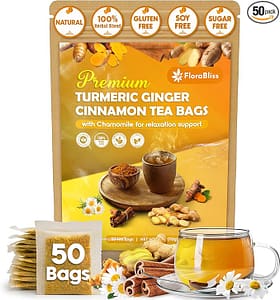
50 Bags Premium Turmeric Ginger Cinnamon Tea with Upgraded Chamomile
200Pcs Tea Filter Bags, Disposable Tea Filter Bags for Loose Leaf Tea from Safe Natural Materials
BOXING Warm and Cool Mist Humidifiers for Bedroom Large Room Home