A centuries-old healing tradition
Long before modern medicine, humans turned to plants for comfort and healing. Among the most beloved natural remedies, chamomile and ginger have been used across civilizations — from ancient Egypt and Greece to traditional Chinese and Ayurvedic medicine — to relieve respiratory infections, soothe inflammation, and strengthen the immune system (McKay & Blumberg, 2006; Grzanna, Lindmark, & Frondoza, 2005).
Today, science is confirming what generations already knew: this herbal duo can support the body’s recovery from colds, coughs, and flu naturally, without harsh side effects.
Chamomile: The calming healer
Chamomile (Matricaria chamomilla) is a gentle herb from the daisy family, rich in compounds such as apigenin, bisabolol, and chamazulene, which contribute to its anti-inflammatory, antimicrobial, and antioxidant properties (Srivastava, Shankar, & Gupta, 2010).
1. Reducing inflammation and throat irritation
Chamomile tea may ease sore throats and nasal inflammation caused by upper respiratory infections. Its flavonoids and terpenoids act to reduce oxidative stress and calm irritated mucous membranes (McKay & Blumberg, 2006).
2. Promoting rest and immune recovery
Sleep quality directly impacts immune function. Chamomile’s mild sedative effect, mediated by the compound apigenin, helps reduce anxiety and promote deeper rest — both essential for faster recovery (Amsterdam et al., 2009). A well-rested body fights infections more effectively.
3. Supporting respiratory relief
Inhaling steam from chamomile tea or sipping it warm can loosen phlegm, open nasal passages, and provide mild relief from congestion (National Center for Complementary and Integrative Health, 2022).
Ginger: The warming protector
Ginger (Zingiber officinale) is another medicinal powerhouse, used for over 2,500 years. It is best known for its warming, anti-inflammatory, and expectorant effects, primarily due to bioactive compounds such as gingerols and shogaols (Ali, Blunden, Tanira, & Nemmar, 2008).
1. Relieving cough and mucus buildup
Ginger acts as a natural bronchodilator, helping to relax the airways and ease coughing. Laboratory studies suggest that gingerol helps inhibit airway inflammation and promote easier breathing (Liu et al., 2023).
2. Fighting infections and inflammation
Its antimicrobial action helps inhibit the growth of respiratory pathogens, while its antioxidant compounds assist in neutralizing free radicals that can worsen symptoms (Mashhadi et al., 2013).
3. Supporting digestion and circulation
Fever and colds can reduce appetite and slow digestion. Ginger stimulates gastric motility and improves blood flow, helping distribute immune cells more efficiently throughout the body (U.S. Department of Agriculture, 2022).
Why chamomile and ginger work better together
While both herbs are effective individually, research suggests that combining them enhances their benefits. Chamomile’s anti-inflammatory and calming effects complement ginger’s circulatory and expectorant actions — creating a holistic remedy that addresses both the symptoms and the stress associated with being sick.
Together, they can:
- Support immune system activity (through antioxidant and anti-inflammatory pathways)
- Soothe sore throats and calm coughing
- Reduce stress and anxiety, which often worsen symptoms
- Improve digestion and hydration — crucial during illness
This synergy aligns with the holistic principles of natural medicine: treating the whole person, not just the symptoms.
How to prepare the perfect cup at home
Making this healing blend requires no special equipment — just two ingredients and a few minutes.
Ingredients:
- 1 teaspoon dried chamomile flowers or 1 chamomile tea bag
- 3–4 thin slices of fresh ginger (or ½ teaspoon grated ginger root)
- 250 ml (1 cup) hot water
- Optional: 1 teaspoon honey and a squeeze of lemon
Directions:
- Boil water and pour it over the chamomile and ginger.
- Cover and steep for 7–10 minutes.
- Strain and add honey and lemon, if desired.
- Drink warm, up to three times a day — especially before bed or after meals.
Honey not only sweetens the tea but also provides antibacterial and throat-soothing properties (Cohen et al., 2012). Lemon adds vitamin C and enhances absorption of antioxidants.
Safety and precautions
Chamomile and ginger are considered safe for most adults when consumed in moderate amounts.
However:
- Pregnant or breastfeeding women should limit intake and consult their doctor, as concentrated forms of ginger may cause mild gastric irritation.
- People allergic to ragweed, daisies, or chrysanthemums should avoid chamomile.
- Individuals on anticoagulant or blood pressure medications should consult their physician before frequent use (NCCIH, 2022).
Always use store-bought herbs from reputable sources to avoid contamination or misidentification.
Practical takeaway
When you feel a cold or flu coming on, a simple cup of chamomile and ginger tea can help your body heal itself naturally.
Its combination of calm, warmth, and anti-inflammatory action makes it a safe, science-backed way to ease symptoms, boost relaxation, and restore balance — one sip at a time.
Nature often provides what the body needs most — gentle, steady support.
References
- Ali, B. H., Blunden, G., Tanira, M. O., & Nemmar, A. (2008). Some phytochemical, pharmacological and toxicological properties of ginger (Zingiber officinale Roscoe): A review of recent research. Food and Chemical Toxicology, 46(2), 409–420. https://doi.org/10.1016/j.fct.2007.09.085
- Amsterdam, J. D., Li, Y., Soeller, I., Rockwell, K., Mao, J. J., & Shults, J. (2009). A randomized, double-blind, placebo-controlled trial of oral Matricaria recutita (chamomile) extract therapy of generalized anxiety disorder. Journal of Clinical Psychopharmacology, 29(4), 378–382. https://doi.org/10.1097/JCP.0b013e3181ac935c
- Cohen, H. A., Rozen, J., Kristal, H., Laks, Y., Berkovitch, M., Uziel, Y., … & Efrat, H. (2012). Effect of honey on nocturnal cough and sleep quality: A double-blind, randomized, placebo-controlled study. Pediatrics, 130(3), 465–471. https://doi.org/10.1542/peds.2011-3075
- Grzanna, R., Lindmark, L., & Frondoza, C. G. (2005). Ginger—An herbal medicinal product with broad anti-inflammatory actions. Journal of Medicinal Food, 8(2), 125–132. https://doi.org/10.1089/jmf.2005.8.125
- Liu, Z., Liu, J., Li, H., Zhang, Y., & Chen, Y. (2023). The effects of ginger on upper respiratory tract infections: A systematic review. Phytotherapy Research, 37(4), 1822–1831. https://doi.org/10.1002/ptr.7769
- Mashhadi, N. S., Ghiasvand, R., Askari, G., Hariri, M., Darvishi, L., & Mofid, M. R. (2013). Anti-oxidative and anti-inflammatory effects of ginger in health and physical activity: Review of current evidence. International Journal of Preventive Medicine, 4(S1), S36–S42. https://www.ncbi.nlm.nih.gov/pmc/articles/PMC3665023/
- McKay, D. L., & Blumberg, J. B. (2006). A review of the bioactivity and potential health benefits of chamomile tea (Matricaria recutita L.). Phytotherapy Research, 20(7), 519–530. https://doi.org/10.1002/ptr.1900
- National Center for Complementary and Integrative Health. (2022). Chamomile and ginger: What you need to know. https://www.nccih.nih.gov/
- Srivastava, J. K., Shankar, E., & Gupta, S. (2010). Chamomile: A herbal medicine of the past with bright future. Molecular Medicine Reports, 3(6), 895–901. https://doi.org/10.3892/mmr.2010.377
- U.S. Department of Agriculture. (2022). Chamomile and ginger nutrition data. https://fdc.nal.usda.gov/
Related products
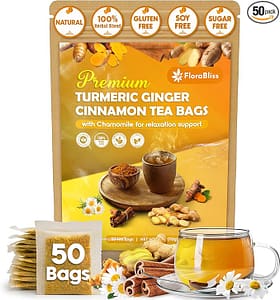
50 Bags Premium Turmeric Ginger Cinnamon Tea with Upgraded Chamomile

200Pcs Tea Filter Bags, Disposable Tea Filter Bags for Loose Leaf Tea from Safe Natural Materials

BOXING Warm and Cool Mist Humidifiers for Bedroom Large Room Home