The Nutritional Power of Blueberries
Blueberries are among the most nutrient-dense fruits available, combining vitamins, minerals, fiber, and bioactive compounds that protect cells and reduce disease risk.
Nutritional Profile (per 1 cup – ~150g fresh blueberries):
- Calories: 80
- Fiber: 3.6g
- Vitamin C: 24% DV
- Vitamin K: 36% DV
- Manganese: 25% DV
- Anthocyanins: ~400mg (varies by variety and ripeness)
1. Brain Health: Delaying Cognitive Decline
The deep blue color of blueberries comes from anthocyanins, powerful antioxidants that can cross the blood–brain barrier, improve communication between neurons, and reduce oxidative stress.
Scientific Insight:
A Harvard-based longitudinal study found that higher berry consumption in older women was associated with a delay of up to 2.5 years in cognitive aging (Devore et al., 2012).
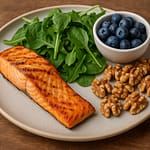
Practical Tip: Combine blueberries with walnuts for a synergistic brain-boosting snack.
2. Heart Health: Enhancing Vascular Function
Blueberries are rich in flavonoids and soluble fiber, which help relax blood vessels, improve circulation, and support cholesterol management.
Scientific Insight:
A 6-month randomized controlled trial found that daily consumption of one cup of blueberries significantly improved endothelial function, reduced arterial stiffness, and increased HDL cholesterol in people with metabolic syndrome (Curtis et al., 2019).
Practical Tip: Add fresh blueberries to your morning oatmeal for a heart-healthy breakfast.
3. Immune Support and Anti-Inflammatory Action
Blueberries provide a high dose of vitamin C, essential for immune defense, and anthocyanins, which reduce chronic inflammation.
Scientific Insight:
Vitamin C plays a critical role in supporting immune cell function and enhancing the skin’s defense system (Carr & Maggini, 2017).
Practical Tip: In flu season, pair blueberries with citrus fruits for a double immune boost.
4. Blood Sugar Control and Weight Management
Despite their natural sweetness, blueberries have a low glycemic index and improve insulin sensitivity.
Scientific Insight:
A clinical trial showed that blueberry bioactives improved insulin sensitivity in obese, insulin-resistant individuals without causing weight gain (Stull et al., 2010).
Practical Tip: Use blueberries as a natural sweetener in smoothies to avoid refined sugars.
Best Ways to Include Blueberries in Your Diet
- Fresh: Eat raw for maximum antioxidant benefits.
- Frozen: Ideal for smoothies and retain most nutrients.
- Baked: Use in whole-grain muffins or healthy pancakes.
- Infused: Add to water for a refreshing, nutrient-rich drink.
Bottom Line: Blueberries are more than a tasty fruit — they’re a scientifically validated ally for brain health, cardiovascular wellness, immune defense, and metabolic balance. A single daily serving can contribute to a longer, healthier life.
References:
- Carr, A. C., & Maggini, S. (2017). Vitamin C and immune function. Nutrients, 9(11), 1211. https://doi.org/10.3390/nu9111211
- Curtis, P. J., van der Velpen, V., Berends, L., Jennings, A., Feelisch, M., Umpleby, A. M., … Cassidy, A. (2019). Blueberries improve biomarkers of cardiometabolic function in participants with metabolic syndrome — results from a 6-month, double-blind, randomized controlled trial. The American Journal of Clinical Nutrition, 109(6), 1535–1545. https://doi.org/10.1093/ajcn/nqy380
- Devore, E. E., Kang, J. H., Breteler, M. M., & Grodstein, F. (2012). Dietary intakes of berries and flavonoids in relation to cognitive decline. Annals of Neurology, 72(1), 135–143. https://doi.org/10.1002/ana.23594
- Stull, A. J., Cash, K. C., Johnson, W. D., Champagne, C. M., & Cefalu, W. T. (2010). Bioactives in blueberries improve insulin sensitivity in obese, insulin-resistant men and women. The Journal of Nutrition, 140(10), 1764–1768. https://doi.org/10.3945/jn.110.125336