The word “superfood” gets applied loosely in popular culture — sometimes to exotic imports, sometimes to whatever ingredient is trending this season. But beneath the marketing, a handful of whole foods genuinely stand out for their nutritional density and the strength of evidence behind their health benefits. These are foods that quietly do a great deal of good when they become reliable parts of your daily eating.
This list focuses on accessible, affordable, and well-researched options — the kind of foods your grandmother would recognize. No powders, no capsules, no complicated protocols. Just real food, chosen wisely and eaten consistently.
1. Blueberries
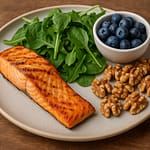
Few foods pack as much nutritional value into as small a package as blueberries. They are rich in anthocyanins — the pigments that give them their deep blue-purple color — which function as potent antioxidants in the body, helping to neutralize oxidative stress and reduce inflammation.
A large systematic review and dose-response meta-analysis of prospective studies, including data from millions of participants, found that higher fruit and vegetable intake was significantly associated with reduced risk of cardiovascular disease, total cancer, and all-cause mortality — with benefits observed even at modest daily intakes (Aune et al., 2017). Berries, with their exceptional antioxidant content, represent some of the most nutrient-dense options within this broader fruit and vegetable category.
Blueberries are also one of the most practical additions to a daily diet. Fresh, frozen, or added to oatmeal or a smoothie, they require no preparation and blend easily into existing meals.
2. Fatty Fish
Salmon, mackerel, sardines, and herring share a critical nutritional characteristic: high concentrations of long-chain omega-3 polyunsaturated fatty acids, particularly EPA and DHA. These fatty acids play a central role in cardiovascular health, inflammation regulation, and brain function.
A landmark review published in JAMA evaluated the evidence on fish intake and human health, concluding that the cardiovascular benefits of regular fish consumption substantially outweigh the potential risks associated with contaminants for most adults (Mozaffarian & Rimm, 2006). The evidence points consistently toward regular fatty fish consumption — two to three servings per week — as one of the most impactful dietary choices for long-term heart and metabolic health.
Practical approaches include baked salmon, canned sardines on whole-grain crackers, or mackerel added to salads. These are among the most affordable ways to access the health benefits of fatty fish regularly.
3. Leafy Green Vegetables
Spinach, kale, Swiss chard, arugula, and collard greens belong to one of the most nutrient-dense food categories available. They provide folate, vitamin K, magnesium, calcium, iron, and a range of antioxidant compounds — all in foods that are extremely low in calories.
The same large meta-analysis that documented the cardiovascular and cancer-protective benefits of fruits found that leafy green vegetables showed some of the strongest associations with reduced all-cause mortality across the studies analyzed (Aune et al., 2017). Consistent consumption of leafy greens is among the dietary patterns most consistently linked to longer, healthier lives across population studies worldwide.
A handful of spinach added to a morning smoothie, a side salad with dinner, or wilted greens cooked into eggs are all simple, practical ways to make leafy greens a daily presence in your diet.
4. Eggs
Eggs are one of the most complete whole-food sources of nutrition available. A single large egg contains high-quality protein with all essential amino acids, along with vitamins B2, B12, D, and A, choline for brain and liver function, lutein and zeaxanthin for eye health, and meaningful amounts of selenium and phosphorus.
The micronutrients found in eggs — particularly B vitamins and minerals — play essential roles in energy metabolism and the reduction of fatigue. Research has highlighted the importance of adequate B-vitamin and mineral intake for maintaining cognitive function, reducing fatigue, and supporting sustained energy throughout the day (Tardy et al., 2020). Eggs offer many of these micronutrients in a highly bioavailable form, meaning the body can absorb and use them efficiently.
Boiled, poached, or scrambled, eggs are also among the most affordable sources of high-quality nutrition in any market.
5. Sweet Potatoes
Sweet potatoes are one of the most nutritionally complete complex carbohydrates available. They are exceptionally high in beta-carotene — the precursor to vitamin A — which the body converts as needed. A single medium sweet potato provides well over the daily recommended intake of vitamin A, along with meaningful amounts of vitamin C, potassium, manganese, and dietary fiber.
The micronutrient density of sweet potatoes makes them particularly valuable as a staple food. Vitamins and minerals are not optional accessories to a healthy diet — they are the biochemical infrastructure that supports nearly every system in the body, from immune function to energy production (Tardy et al., 2020). Sweet potatoes deliver a wide spectrum of these nutrients in a single, versatile, and inexpensive food.
Roasted, baked, or mashed, sweet potatoes are one of the most practical ways to add substantial micronutrient value to any meal.
6. Legumes
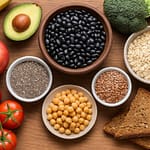
Lentils, chickpeas, black beans, kidney beans, and other legumes occupy a unique nutritional position: they are simultaneously a high-protein food, a high-fiber food, a source of complex carbohydrates, and a provider of important minerals including iron, magnesium, folate, and potassium. No other food category offers this combination.
Their fiber content — both soluble and insoluble — supports digestive health, helps regulate blood sugar by slowing glucose absorption, and contributes to satiety, reducing overall caloric intake naturally. Legumes are also among the most affordable and shelf-stable whole foods available, making them accessible regardless of budget or location.
In populations where legumes are a dietary staple — the Mediterranean, parts of Asia, and Latin America — they consistently appear as a shared feature of the eating patterns associated with the greatest longevity and lowest rates of chronic disease. This is not a coincidence.
7. Nuts and Seeds
Walnuts, almonds, flaxseeds, chia seeds, and pumpkin seeds are among the most nutrient-dense small foods in existence. They provide healthy unsaturated fats, plant-based protein, dietary fiber, magnesium, zinc, and — in the case of walnuts and flaxseeds — meaningful amounts of plant-based omega-3 fatty acids (ALA).
The mineral content of nuts and seeds — particularly magnesium and zinc — plays a significant role in energy metabolism and the prevention of fatigue. Micronutrient deficiencies, including magnesium and zinc, have been associated with increased fatigue and impaired cognitive function even when overall caloric intake is adequate (Tardy et al., 2020). A small daily serving of mixed nuts or seeds is one of the most efficient ways to address these gaps.
A handful of walnuts as a snack, a tablespoon of chia seeds in oatmeal, or a sprinkle of pumpkin seeds on a salad — these are small additions that accumulate meaningful benefit over time.
How to Use This List
The goal is not to eat all seven of these foods every single day — though some days that may happen naturally. The goal is to make them familiar, accessible parts of your regular eating so that they appear consistently throughout the week.
A useful way to think about it: if five of these seven foods appear in your diet each week, you are building a nutritional foundation that supports energy, immune function, cardiovascular health, and longevity without supplements, complicated protocols, or expensive ingredients.
- Add blueberries to breakfast three or four mornings a week — fresh or frozen both count.
- Eat fatty fish two to three times a week — salmon, sardines, and mackerel are the most practical options.
- Include leafy greens in at least one meal daily — salads, cooked greens, or blended into a smoothie.
- Eat eggs several times a week as a fast, nutritionally complete protein source.
- Use legumes as a regular protein and fiber source, particularly in soups, stews, and grain bowls.
- Keep nuts and seeds accessible as a snack or a topping for meals.
- Rotate sweet potatoes in as a carbohydrate side dish in place of more processed options.
A Note on Consistency
The most powerful dietary intervention is not a dramatic overhaul — it is consistency with the basics over years and decades. Each of the seven foods on this list has been used by people around the world for centuries, not because they were trending, but because they work. They nourish the body in ways that are both measurable in research and felt in daily life.
Your body was designed to thrive on real food. Choose it consistently, and trust the process.
References
Aune, D., Giovannucci, E., Boffetta, P., Fadnes, L. T., Keum, N., Norat, T., Greenwood, D. C., Riboli, E., Vatten, L. J., & Tonstad, S. (2017). Fruit and vegetable intake and the risk of cardiovascular disease, total cancer and all-cause mortality — a systematic review and dose-response meta-analysis of prospective studies. International Journal of Epidemiology, 46(3), 1029–1056. https://doi.org/10.1093/ije/dyw319
Mozaffarian, D., & Rimm, E. B. (2006). Fish intake, contaminants, and human health: Evaluating the risks and the benefits. JAMA, 296(15), 1885–1899. https://doi.org/10.1001/jama.296.15.1885
Tardy, A. L., Pouteau, E., Marquez, D., Yilmaz, C., & Scholey, A. (2020). Vitamins and minerals for energy, fatigue and cognition: A narrative review of the biochemical and clinical evidence. Nutrients, 12(1), 228. https://doi.org/10.3390/nu12010228